


A leaking roof: what to do safely
When water starts coming into your home, focus first on people and immediate hazards. The steps below help you explain the problem and arrange assistance while staying indoors or safely at ground level.
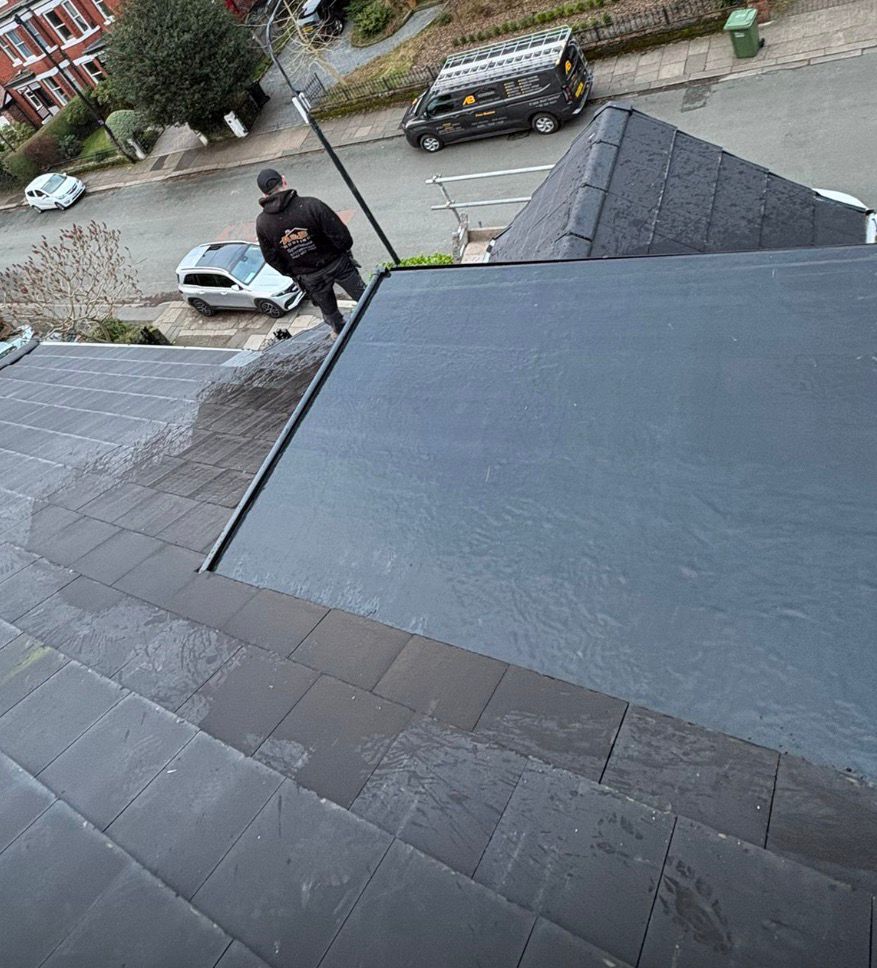
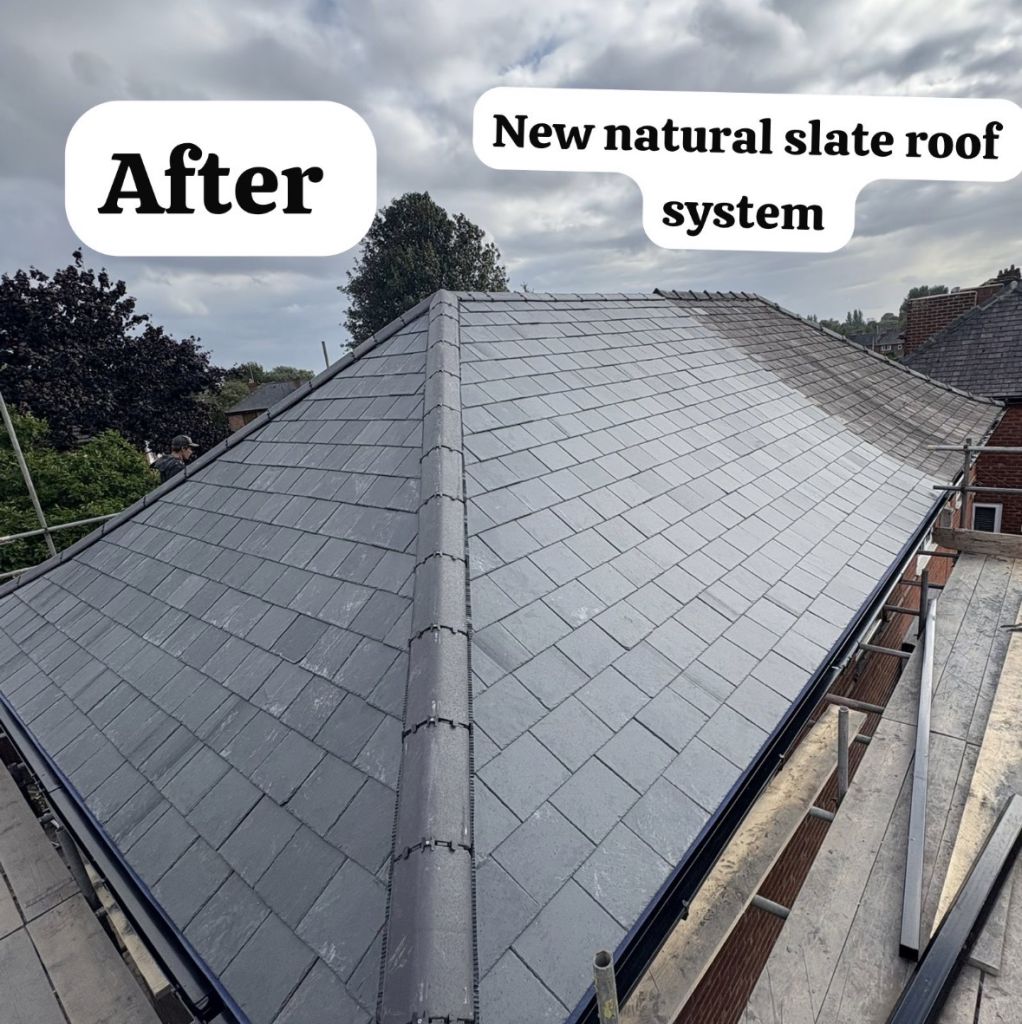
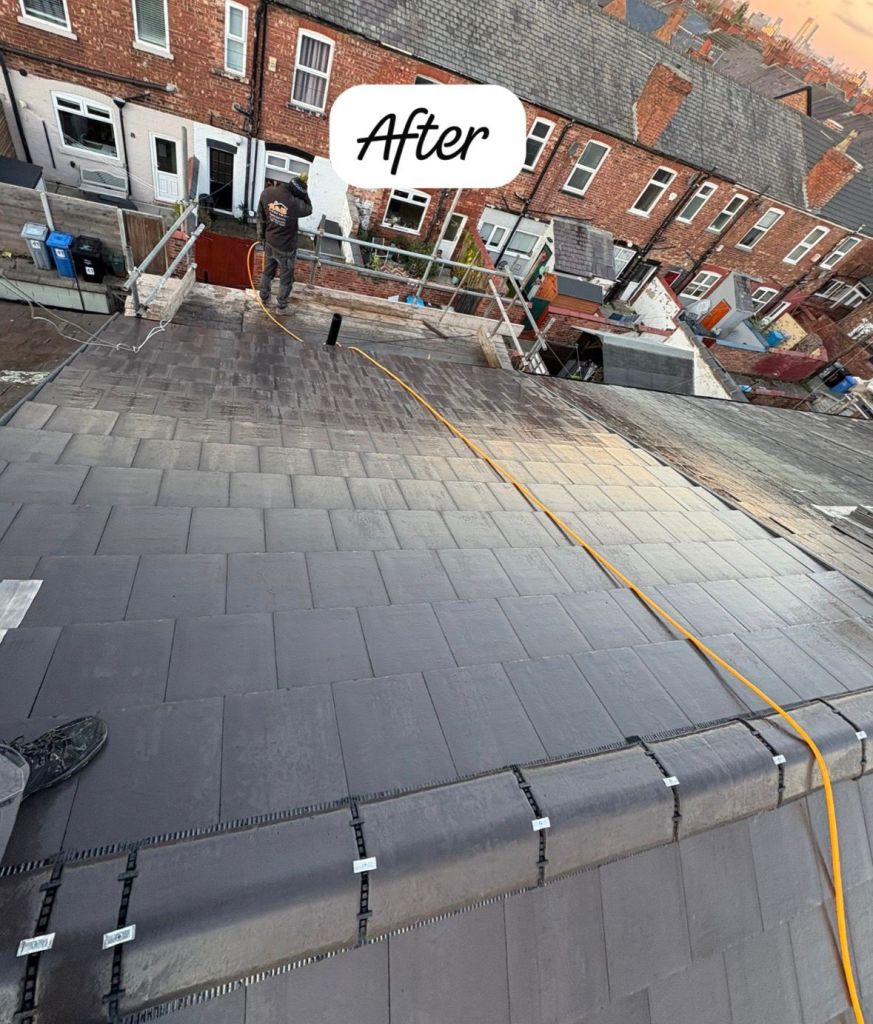
From our project gallery.
Tell us what has happened
For a roof enquiry, contact AB Roofing Specialists with your postcode and the symptoms you have noticed. Mention active water ingress at the start of the conversation and ask about current availability.
Keep people clear of the affected area
Keep children, pets and other occupants away from a damaged ceiling, loose materials or a slippery wet area. If a wet ceiling is sagging, developing new cracks or shedding material, leave the affected space and seek urgent professional advice. Do not puncture, pull down or investigate the ceiling yourself.
GOV.UK: Guidance on hazards — structural collapse and electrical safety
Treat water near electrics as a separate hazard
Do not touch wet light fittings, switches, sockets or electrical equipment. If wiring or appliances may have become wet, avoid using them and ask a qualified electrician for advice as well as arranging help with the leak. Do not enter water or a hazardous area to reach a switch or retrieve an appliance.
HSE: Introduction to electrical safety GOV.UK: How to recover from flooding — electrical equipment checks GOV.UK: What to do before or during a flood
Protect belongings only where it is safe
Move small belongings away from the wet area only if you can do so from a safe position. Where there is no ceiling or electrical hazard, a container can catch a drip without you reaching upwards or standing beneath damaged material. Stop if conditions change, and do not put yourself at risk to save possessions.
Record what you can see safely
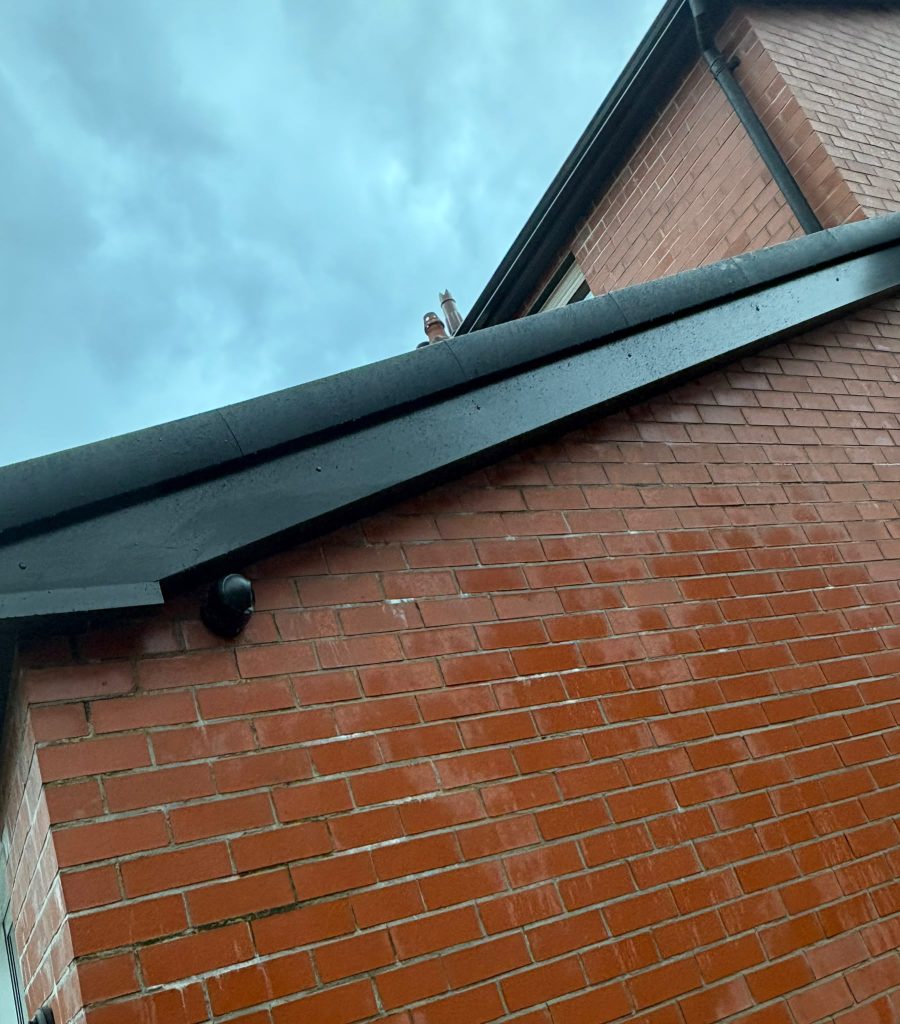
Note the room affected, when the water appeared, the weather at the time and whether the problem has happened before. Take indoor photographs only from a safe position; an exterior view from ground level may also help. There is no need to climb a ladder, enter an unsafe loft or walk on a garage or extension roof to provide an enquiry.
Historic England: Maintenance checklist HSE: Fragile surfaces
Explain the urgency when you contact someone
State your postcode, whether water is coming in now, how much you can see and any concern about the ceiling or electrics. Mention recent roof work and tell the contractor if the affected roof is over an extension, bay, garage or main part of the house. Ask about current availability, what can be assessed and whether any temporary measure would be separate from a permanent repair.
Keep a record of the agreed next step
Ask what the proposed visit or work covers, including any charge, access arrangements and limitations caused by weather. A temporary measure should be identified as temporary, with a clear plan for any further investigation or repair. Keep photographs, messages and paperwork together, and contact your landlord or insurer where their involvement is needed.
Roofing quote checklist GOV.UK: How to recover from flooding — electrical equipment checks
Roofing advice Roof repair or replacement? Roof repair cost factors Quote checklist
Questions before
you enquire
For a roof enquiry, contact AB Roofing Specialists with your postcode and the symptoms you have noticed. Mention active water ingress at the start of the conversation and ask about current availability.
01Should I go onto the roof to put on a cover?
+
No. Roofs and rooflights can be fragile, and roof work needs suitable precautions and competent people; ask a contractor about an appropriate temporary or permanent response.
02What if water is coming through a light fitting?
+
Keep clear of the fitting and do not touch or use the affected electrics. Seek qualified electrical advice and explain this hazard when reporting the leak.
Contact AB Roofing Specialists
HSE: Introduction to electrical safety GOV.UK: How to recover from flooding — electrical equipment checks
03Can I put a bucket under a drip?
+
Only where you can place it safely, without standing under a damaged ceiling or near an electrical hazard. If the ceiling is changing shape, developing new cracks or shedding material, leave that area rather than trying to catch the water.
Contact AB Roofing Specialists
GOV.UK: Guidance on hazards — structural collapse and electrical safety
04What information is useful for a roof enquiry?
+
Give your postcode, affected room, when the leak began and whether water is still entering. Add earlier repair details and photographs you can take safely, without going onto the roof.
05Does a leak after rain prove which roof part has failed?
+
It is a useful observation to report, not a complete diagnosis. Describe the timing and location rather than choosing a repair yourself, so the cause can be investigated.
06What if I cannot get immediate attendance?
+
Ask about the contractor's actual availability and explain any changing hazard. If people are in immediate danger, use emergency help instead of waiting for a routine roof appointment.